
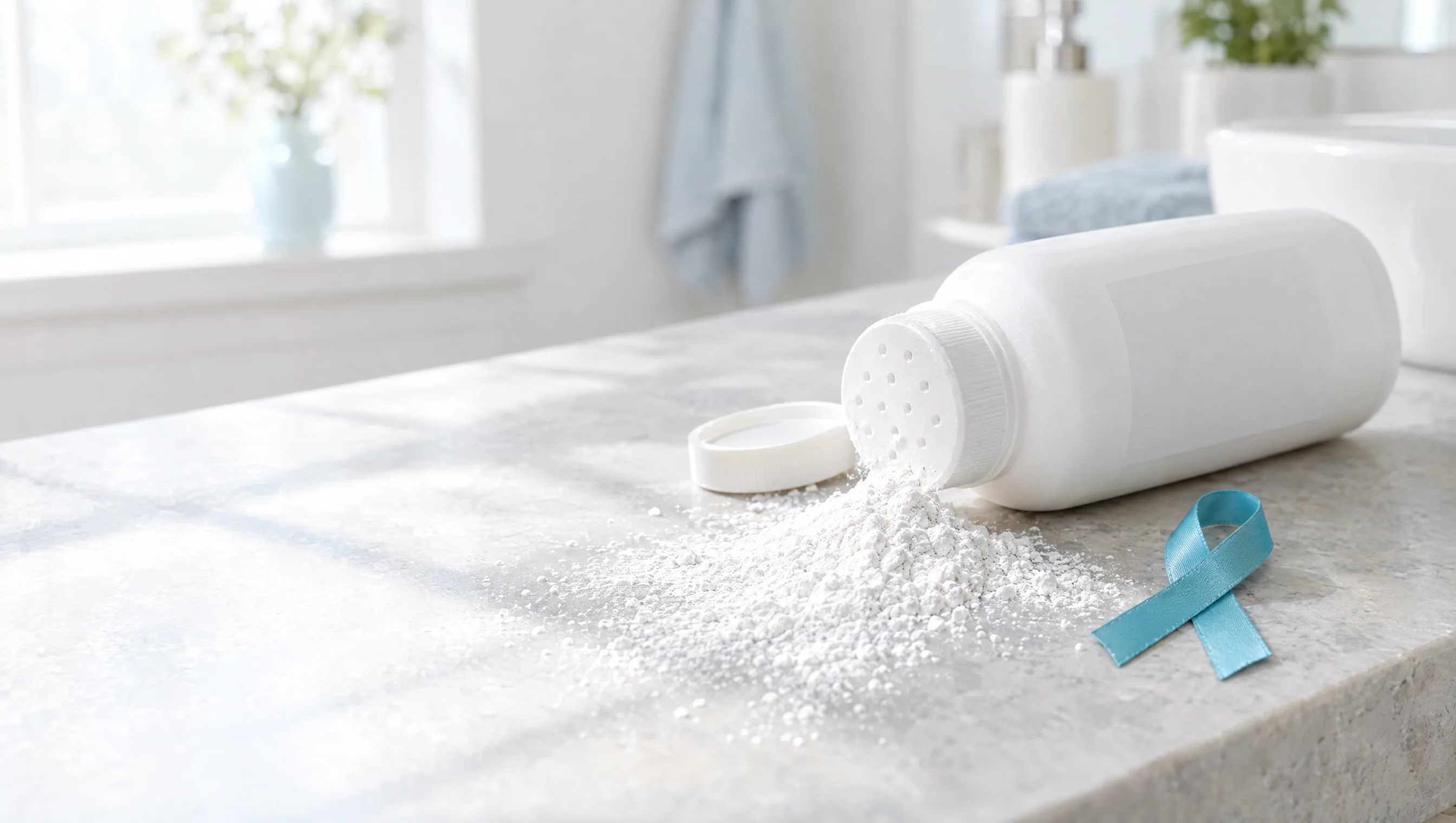
Active investigation
Ovarian cancer after years of using talcum powder?
Claims allege talc powder is linked to ovarian cancer and mesothelioma, and that manufacturers knew for decades without warning anyone.
The talcum powder claim explained
Video slot
- Free, confidential claim review
- No up-front cost, you pay nothing unless you win
- Most callbacks within 15 minutes
- Two minutes to complete the form
What the claims are about
Talc is a naturally occurring mineral often found in the ground alongside asbestos. For decades, talc-based body and baby powders were marketed for daily use, including for feminine hygiene. Litigation alleges that manufacturers were aware of internal testing and outside research raising concerns about asbestos contamination and ovarian cancer risk, and that consumers were never warned. Claims continue to be evaluated for people diagnosed after years of regular use.
What plaintiffs allege
Decades of internal knowledge
Plaintiffs allege that internal testing and correspondence raised concerns about asbestos in talc long before any public warning was given.
Marketed for daily, intimate use
The products were promoted for routine application, including feminine hygiene use, which the claims say dramatically increased cumulative exposure.
No warning on the label
Claims argue that a clear warning would have led many consumers to stop using the product or choose a cornstarch-based alternative.
Diagnoses connected to these claims
Claims generally involve regular use of talc-based powder over a period of years, followed by one of the following diagnoses.
- Epithelial ovarian cancer
- Fallopian tube cancer
- Uterine or endometrial cancer
- Mesothelioma (including in men, from talc exposure)
- Primary peritoneal cancer
You may qualify if
- Regular use of talc-based body, baby or feminine powder, typically over several years
- A cancer diagnosis after that use, confirmed by a physician
- Medical records or pathology reports are available, or can be requested
- Claims may also be brought by the family of someone who has passed away
Time is limited, and it takes a couple of minutes to see if you qualify
- 01
Complete the form
Answer a few short questions. It takes about two minutes and costs nothing.
- 02
Get a free claim review
A claims specialist calls to discuss your situation and collect the details needed to evaluate your claim.
- 03
Pursue compensation
If you qualify, you are connected with an attorney who fights for the compensation you deserve.
Common questions
I do not remember which brand we used.
That is common and not automatically disqualifying. Purchase habits, household recollection, store records and the years of use all help establish product identification.
My mother passed away from ovarian cancer. Can I file?
In most states a spouse, child or the representative of the estate can bring a wrongful death or survival claim. Time limits for these claims are often measured from the date of death.
Is it too late to file?
Not necessarily, but deadlines vary by state and by whether the claim is brought by the injured person or a family member. This is the single most important thing to get reviewed quickly.
Does a settlement in the news mean I automatically get paid?
No. Reported settlements and verdicts involve specific plaintiffs and specific facts. Every claim is evaluated individually, and no outcome is ever guaranteed.
Other active claims
 Active investigation
Asbestos & Mesothelioma
Exposure decades ago is still producing mesothelioma and lung cancer diagnoses that are being compensated from established trust funds today.
 Active investigation
Hair Straightener & Relaxer
A 2022 NIH study found frequent users of chemical hair straighteners were more than twice as likely to develop uterine cancer.
 Active investigation
Depo-Provera
Claims allege the Depo-Provera contraceptive injection was linked to meningioma brain tumors without adequate warning to U.S. patients.
This page describes allegations made in pending litigation. Allegations are not findings of fact, and no outcome is guaranteed. Prior results do not guarantee a similar outcome. Information last reviewed August 2026.